
For a while, Konstantly asked people a question I thought was helpful: how would you like to build your course?
There was a simple sequence, where pages, lessons, and tests followed one another. There was also a visual canvas, where an author could connect elements and build different routes through the material.
Both were useful. Giving people a choice seemed reasonable. I had spent a lot of time building that capability, and I wanted them to know it was there.
The problem was the timing. We were asking someone to understand two ways of authoring a course before they had made their first one.
I knew the answer because I built the tool
From my side, the distinction was obvious. A straightforward onboarding course could be a sequence. A course where a quiz result changed the next lesson might need branching. I could see the whole system and imagine where each approach would be useful.
The person arriving for the first time had a different starting point. They had something to teach. Maybe they had a document, a set of slides, or a process that lived mostly in their head. They wanted to turn it into a course.
To answer our setup question confidently, they would have to picture the finished structure, learn our terminology, and decide how much flexibility they might need later. We had moved part of the product's complexity into their first task.
I had to stop looking at that choice through the eyes of the person who designed it.
Let the course tell you when it needs more
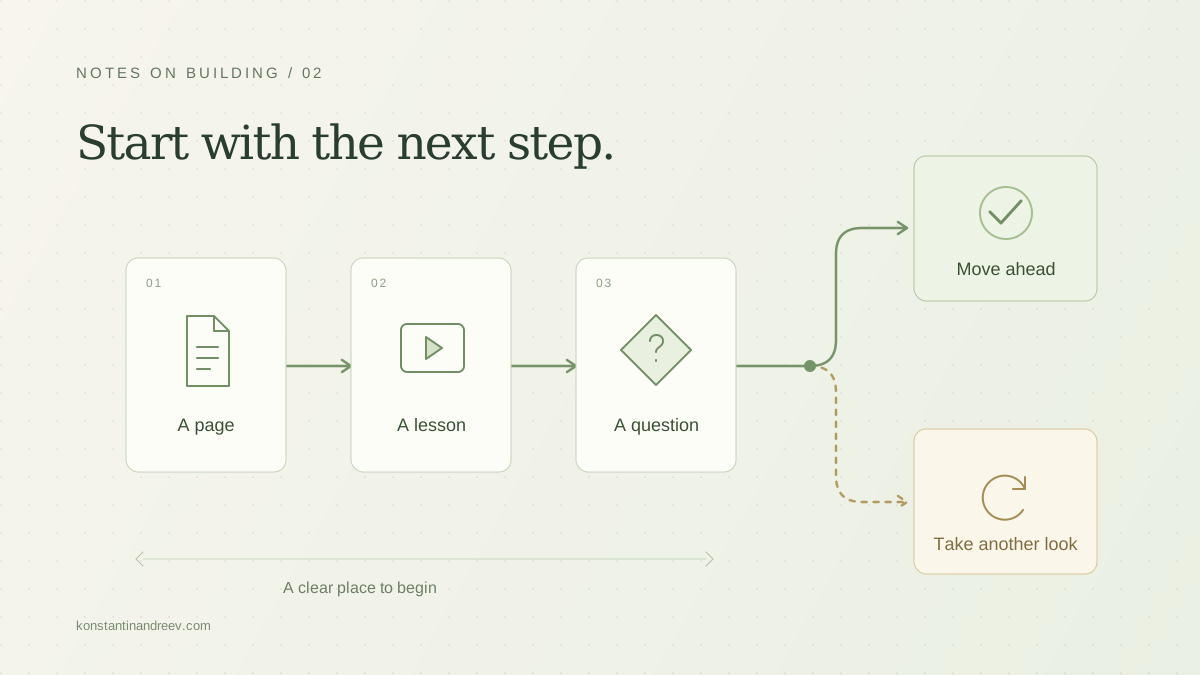
I changed the starting point to a simple sequence. Add a page. Add a lesson. Add a test. There is an order, and the author can see what comes next.
Then, if a learner who fails a quiz needs to return to a lesson while someone who passes moves toward a certificate, there is a reason to introduce branching. The visual canvas is useful because the course now contains a problem that a straight list cannot express.
The author has something concrete to work with by then. They can point to the decision in their own material. The additional tool arrives with a purpose they already understand.
I find that a much better moment to teach someone a more powerful way of working.
A good default still needs an escape route
Choosing a simpler starting point creates responsibilities. An author should be able to grow beyond it. They should also be able to simplify again when their course allows it.
The difficult part is deciding what a return to a sequence means. If the canvas contains conditional routes, quietly flattening it would change the learning experience. A cleaner screen would have cost the author some of their work.
So the rule has to be explicit: return when the course can be represented without losing its logic. Otherwise, explain what needs attention first.
This is the work behind a simple interaction. You have to understand the more complicated cases well enough to know which decisions you can safely make for someone and which decisions belong to them.
I am applying the same idea to AI
Ask Konstantly starts with a brief and helps create a draft. The author can then review the structure, edit the content, and refine it through the same conversation. The first draft gives them something to react to.
I want that assistance to reduce the effort of starting while keeping the important decisions visible. What should this course teach? Is the wording right? Does the assessment check the thing that matters? Those questions still deserve the author's attention.
The product's job is to make room for that attention. Sometimes that means adding a capability. In this case, it meant taking an early choice out of the way.
When I look at a complicated first screen now, I ask myself which decisions require a person's judgment immediately, and which can wait until the work gives them a better answer.
You can see how this fits into the wider product in the Konstantly case study, including the current builder in action.